
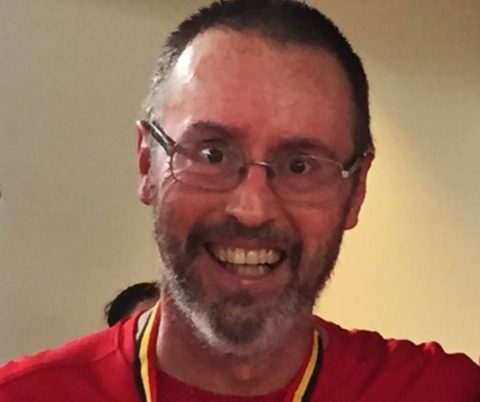
For ten years, Patrick said no to Deep Brain Stimulation. Then he changed his mind.
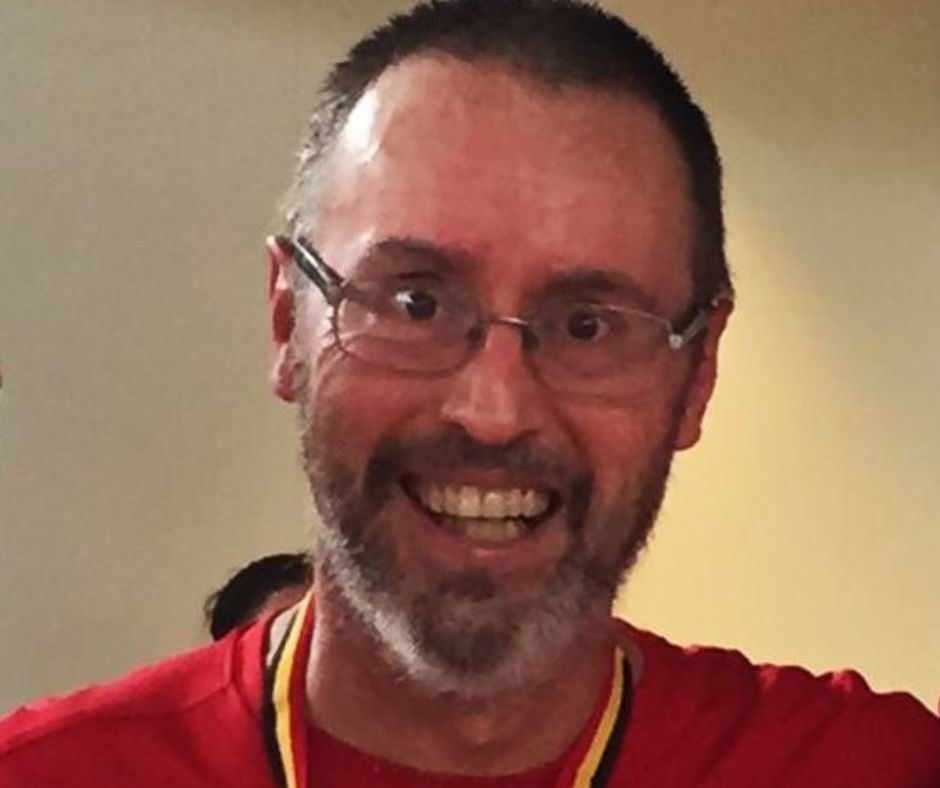 For ten years, neurologists told me that Deep Brain Stimulation (DBS) could potentially help me.
For ten years, I said no.
I had good reasons. DBS treats the symptoms of Parkinson’s; it does not cure the disease. But underneath the rational arguments was another, simpler reason.
I was scared.
The idea of someone operating on my brain frightened me.
People around me encouraged me to reconsider. Wim, my neurologist. Anne-Marie, my wife. Others too. They pushed sometimes, but never forced.
Then, two years ago, I changed my mind.
When I really want to achieve something difficult, I have a trick: I announce it publicly. It is how I once ended up completing an Olympic-distance indoor triathlon in two hours.
So I started telling people: “I am ready for DBS.”
Eventually, I believed it myself.
The part nobody sees
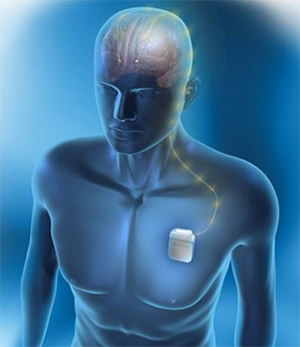 I knew DBS meant an operation. I hadn’t understood quite how much came before and after it.
Altogether, I spent around twenty days going to or staying in hospital, spread across roughly 6-7 months.
Three times during the process, my Parkinson’s medication was withdrawn so the medical team could assess me or carry out the next stage of the procedure.
Those periods were among the hardest.
Imagine sitting in a hospital room, telling your body to move, and having it refuse. Waiting for hours. Depending on other people. Knowing why you are doing it, but still having to get through it.
Those are the moments when you understand that DBS isn’t an individual project.
The people you love are part of it too.
- Would I have recommended DBS at that point?
I would have said: “It depends”.
It depends on your circumstances, the effort you are willing and able to make, and the risks you are prepared to accept.
I had spent ten years saying no.
Now I was placing a different bet.
In the dark
For the operation, I had to be completely “off” my Parkinson’s medication.
I had already shaved my head myself.
The nurse inspected my work and apparently decided it wasn’t good enough.
She shaved it again.
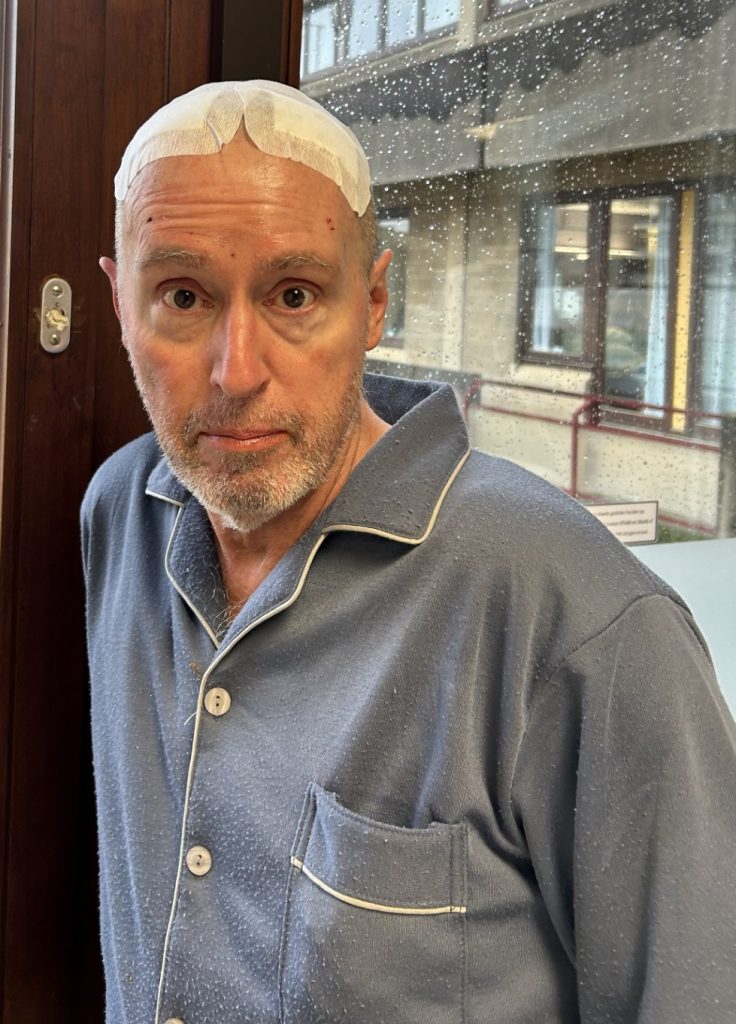 Then two nurses rolled my bed out of the room.
Anne-Marie was there. I waved goodbye.
We both had tears in our eyes.
There is no heroic version of this part of the story. I was simply scared.
I remember the bright lights of the operating room. Smiling faces.
Then everything went black.
The operation took several hours. The neurosurgeon worked with a robotic system to place the electrodes that would deliver the deep brain stimulation.
That evening, Anne-Marie and Arnauld (my son) came to see me.
I was awake. I could eat a little.
And, unfortunately for them, my sense of humour had survived too.
I started juddering and moving like a malfunctioning robot.
“Hang on. I’m all right!”
Luckily, they like my humour – even when it’s bad.
- Would I have recommended DBS that evening?
No. Partly because, at that moment, I regretted having done it (a strange emotional reaction I had for a few weeks)
And also, because I cannot tell another person to undergo brain surgery. There are risks, and outcomes differ. That decision belongs with the patient, their medical team and the people who will live through it alongside them.
Metamorphosis
For fifteen years, I have periodically recorded my Parkinson’s in half-hour intervals: whether I was “on”, “off” or asleep.
Before DBS, those thousands of measurements told a clear story. On average, only about half of each hour was “on”, and my condition fluctuated considerably during the day. As the hours passed, things generally became harder.
My first measurements after DBS look dramatically different.
My “on” time has increased substantially. The fluctuations that used to dominate my days have almost disappeared. And I no longer experience the same deterioration as the day progresses.
But those results need some context.
My “before” data covers thousands of observations over many years. My first “after” data covers only a short period.
And, more importantly, I am one person.
My results are not a target for somebody else. They are not a promise of what DBS will do for another patient. I know that I may be one of the fortunate ones.
And DBS has not made my Parkinson’s disappear.
It treats some of my symptoms. It does not stop the disease itself from progressing. The improvement I am experiencing today does not mean that I will stay like this forever. Parkinson’s will continue to evolve, and symptoms will become more difficult again.
So this is not the end of my Parkinson’s story.
It is a better chapter in it.
And right now, I am making the most of that chapter.
I dare to go to the supermarket again.
I go for walks and discover new places.
I can get up during the night and go to the loo by myself.
Very ordinary things.
Except they aren’t ordinary when you have lost them.
- Would I recommend DBS now?
For me? Absolutely.
That is the only person I can answer for.
Driving again
Two years ago, I lost my driving license.
I was certain I would never be allowed to drive again.
Recently, I drove my daughter Magdelaine to the airport.
There is nothing particularly remarkable about a father driving his daughter to an airport.
Unless, for a long time, you thought you would never do it again.
When we arrived, she looked at me with a great smile.
And she said:
“Papa, never say never.”