 “We want to strengthen the transport system inside the cell, so that the cell can better protect itself against the mechanisms that lead to Parkinson’s disease.”
– Prof. Peter Vangheluwe, KU Leuven
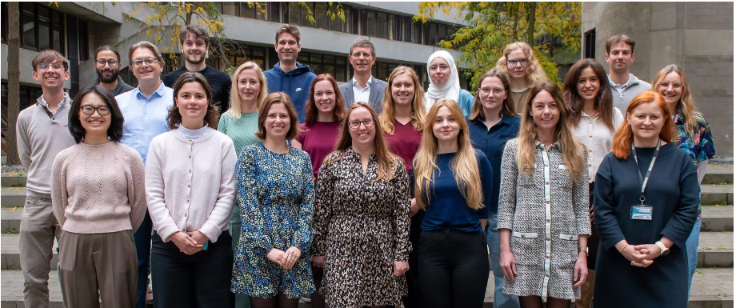
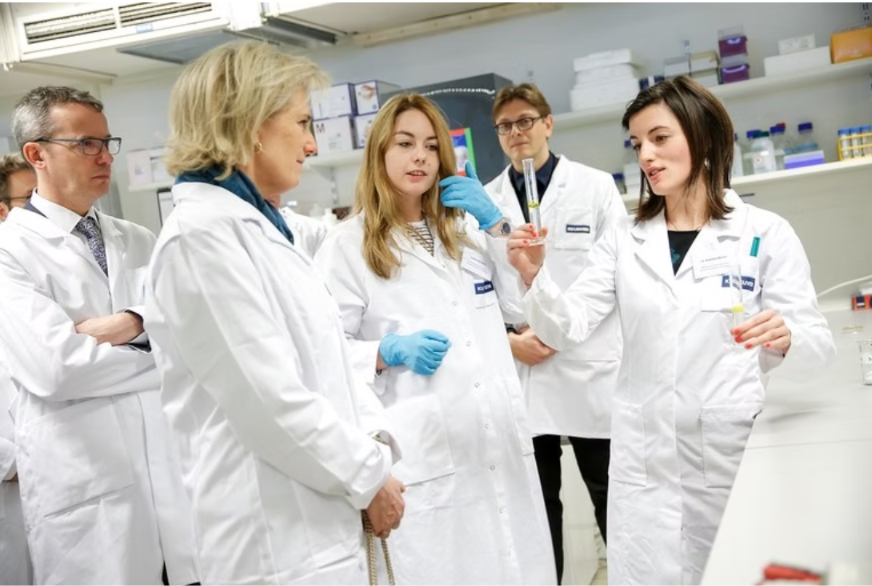
Prof. Peter Vangheluwe is a professor at KU Leuven and head of the Laboratory of Cellular Transport Systems. His research group studies transport systems within cells and their role in Parkinson’s disease and other conditions.
In 2026, the Demoucelle Parkinson Charity provided start-up funding for the research project described below:
—–
How did you get involved in Parkinson’s research, and what does your own research focus on?
“Around 15 to 20 years ago, we started out with a very fundamental question: how do cells stay healthy? A cell is constantly taking in substances, moving them around and getting rid of waste. To do this, it needs a whole range of transport systems. We discovered that many of these transport systems are defective in a wide range of diseases. We studied these transport systems to understand them better and, ultimately, to find ways of improving them. This is how we came across a transporter called ATP13A2. It turns out that it plays an important role in Parkinson’s disease: when it is defective, it can lead to a very severe form of the disease.”
 What exactly does ATP13A2 do, and why is it so important?
“Initially, very little was known about exactly what this transporter does. We discovered that it is active in lysosomes, a part of the cell that you can compare to a recycling centre: waste materials come in, they are broken down, and the building blocks released in the process are returned to the cell.
We found that ATP13A2 plays an important role there: it transports certain substances, called polyamines, from the recycling centre back to the rest of the cell. If ATP13A2 does not work properly, polyamines can build up in the recycling centre, although they are actually needed elsewhere in the cell. We also know that this recycling centre often does not function properly in Parkinson’s disease. Our task is to better understand why this happens.”
You mentioned polyamines. What exactly are they?
“Polyamines are very simple molecules. We get some of them from our diet, but our cells also produce them themselves. They perform many different functions: they help protect the cell against damage, play a role in keeping inflammatory responses under control, and are involved in important processes within the cell, such as the production of proteins.
So you can think of them as substances that help keep the cell healthy. Precisely because they are involved in so many processes, the amount of polyamines needs to remain balanced and properly distributed: too little is not good, but too much is not good either.”
How does this relate to what people generally know about Parkinson’s disease, such as the death of dopaminergic cells?
“In Parkinson’s disease, dopaminergic nerve cells — the cells that produce dopamine — are gradually lost. Several processes appear to contribute to this. For example, not only the recycling centre but also the cell’s energy factories, the mitochondria, function less effectively. As a result, these nerve cells can become more vulnerable to damage.
The support cells around the nerve cells also play a role. If they do not have enough polyamines, they can trigger inflammatory responses, putting additional stress on the nerve cells.
Our hypothesis is that, by improving the way ATP13A2 functions, we may be able to intervene at several points at once: relieve the pressure on the recycling centre, supply the energy factories with protective polyamines, support the cells that help the nerve cells, and reduce inflammatory responses.
Improving the function of the recycling centre could also potentially help prevent the build-up of alpha-synuclein, a protein that accumulates and is strongly associated with Parkinson’s disease.
None of this has been proven yet. We do have indications that polyamines influence these different processes, but there are different views on exactly how significant that influence is in Parkinson’s disease. That is precisely what we want to investigate further.”
Does this mechanism occur in everyone with Parkinson’s disease, or only in certain forms of the disease?
 “My feeling is that it may be relatively widespread, but we do not know that for certain yet. In a large group of people with Parkinson’s disease, changes in the balance of polyamines have been detected, both in the blood and in the brain. This is an indication that something is going wrong with these polyamines.
But Parkinson’s disease does not look the same in everyone. It is therefore quite possible that certain groups of patients are affected more than others.
For example, we are learning a great deal from a group of patients who have a mutation in the ATP13A2 gene, which means that this transporter does not work properly. We are focusing on this group. We are mapping what happens in their brains and blood so that we can build a clear profile of exactly what is going wrong.
We then use that profile to test whether, within the broader group of people with Parkinson’s disease, there are other patients who show the same characteristics. If so, ATP13A2 and polyamines may also play a role for them, and they might potentially benefit most from a therapy that targets this balance.
This is an exercise we are working on now. It is still too early to predict exactly what the outcome will be.”
What role does philanthropy play in this kind of research?
“Scientific research is highly competitive. You make a fundamental discovery in the laboratory that gives rise to an idea for a new therapy, but then there is the issue: how do you translate that idea into a real therapy for patients?
It is precisely in this area, between the initial discovery that could lead to a new therapy and the clinical stage, that there is a major funding gap. Traditional funding channels have conditions attached to them and do not always provide enough room to develop promising new ideas further.
That is where philanthropy can make a difference. It gives researchers the opportunity to take those first important steps and develop results that can, in turn, convince other investors. In this way, you can gradually build a larger pathway towards a therapy.
It is also important, together with the scientific community, to determine which ideas most deserve that support. There are many good ideas, but not enough resources to develop all of them at the same time. Making those choices and helping direct resources towards the areas of greatest need is precisely where philanthropy can play an important role.
For example, the Michael J. Fox Foundation has mapped out a large number of potential new targets for Parkinson’s research and therapies. ATP13A2 is one of the more promising newer targets being investigated. Choices like these can help make research more focused.
Our specific approach focusing on ATP13A2 and polyamines is still a relatively new avenue. That makes the research particularly exciting, but it also means that we have to remain at the forefront ourselves and continue to break new ground if we ultimately want to make a real difference for patients.”