

 “During deep sleep, our brains seem to flush out waste products. People with Parkinson’s often sleep poorly, so we wonder whether this cleaning process is less efficient in them.” — Prof. Moran Gilat, KU Leuven
Prof. Moran Gilat is an assistant professor and lecturer at the Department of Rehabilitation Sciences at KU Leuven and heads the Parkinson Rehabilitation Research Lab (www.pro-labo.be). His team investigates how motor and non-motor symptoms of Parkinson’s influence one another, with a particular focus on gait problems and sleep disorders.
In 2026, the Demoucelle Parkinson Charity provided seed funding for the research project described below:
How did you get into Parkinson’s research, and how did you come to focus on sleep?
“While studying human movement sciences in the Netherlands as an undergraduate, I met people with Parkinson’s disease. They showed me the impact that the disease can have on someone’s life, and that stayed with me. What particularly stuck with me was freezing of gait: the fact that someone can suddenly be unable to take another step while walking. You see it happening right in front of you, and yet so little was known about it.
Sleep became part of my work during my PhD. Many people with Parkinson’s disease — I would even say most — experience sleep problems such as difficulty falling asleep or staying asleep, restless limbs, having to get up frequently during the night to use the toilet, and acting out their dreams. So, I trained as a sleep technologist and worked in a sleep centre for many years. Chronic sleep deprivation has a huge impact on how people feel and how active they are able to be. For me, it is one of the most important non-motor problems of Parkinson’s.”
Your research focuses on what you call the brain’s “night-time cleaning”. What is that?
“Throughout our body, we have lymphatic vessels and lymph nodes that filter out harmful substances: viruses, bacteria, but also misfolded proteins. When you have a throat infection, you can feel the lymph nodes in your neck becoming swollen, precisely because they are working harder. Within the brain tissue itself, there are no conventional lymphatic vessels and lymph nodes such as there are elsewhere in the body. That is striking, because brain cells are constantly active and produce a lot of waste in the process. How the brain gets rid of this waste was a major mystery for a long time.
A little over ten years ago, animal studies may have changed that. These studies showed how clean cerebrospinal fluid (CSF) enters the brain from the skull and travels deep into the brain along spaces surrounding the blood vessels. This fluid consists almost entirely of water, and the theory is that this clean water can enter the brain and, as it travels, wash away harmful waste products such as misfolded proteins. These are precisely the kinds of proteins that accumulate in Parkinson’s and other neurodegenerative diseases such as Alzheimer’s. If I may use a slightly unpleasant comparison: we flush our brains clean like a toilet.
What is particularly interesting is that this cleaning process appears to be most active during deep sleep, when the brain is at rest and space becomes available for the fluid to flow. People with Parkinson’s often sleep poorly very early in the disease, sometimes even before diagnosis. Does poor sleep therefore slow down the cleaning process, leaving more harmful protein behind? Could this create a negative spiral that ultimately contributes to a progressive disease such as Parkinson’s? At this stage, we do not know what is cause and what is effect. What is clear, however, is that poor sleep is bad for health and that sleep problems are central to Parkinson’s and are themselves part of the condition.”
What exactly does your own research focus on?
 “In animals, this flushing process can clearly be seen. We want to know whether we can also measure it safely in living people, and whether it is linked to the severity of their symptoms and to how those symptoms evolve. We are therefore looking for what is known as a biomarker: a measurable signal that tells us something about the disease, specifically in relation to the cerebrospinal fluid theory.
The innovative aspect of our research lies in where we are going to look. Most researchers focus on the beginning of the process, where the clean fluid enters. But along the way, the fluid picks up harmful substances. The ‘dirty water’, as you might call it, is therefore most concentrated when it leaves the brain again, and this part of the process has received much less attention.
We are focusing on two of these exit routes. The first is thought to lie just above the nasal cavities. My hypothesis is that early damage occurs precisely in this area when drainage becomes impaired. This could help explain why the sense of smell deteriorates early in Parkinson’s. Many patients experience loss of smell years before motor symptoms appear. The second exit route lies deep in the brain, near the brainstem, from where the fluid may drain towards the lymph nodes in the neck. This is also where the nuclei involved in acting out dreams are located, when people call out, shout or are physically active in their sleep. That too is a well-known early feature of Parkinson’s disease.
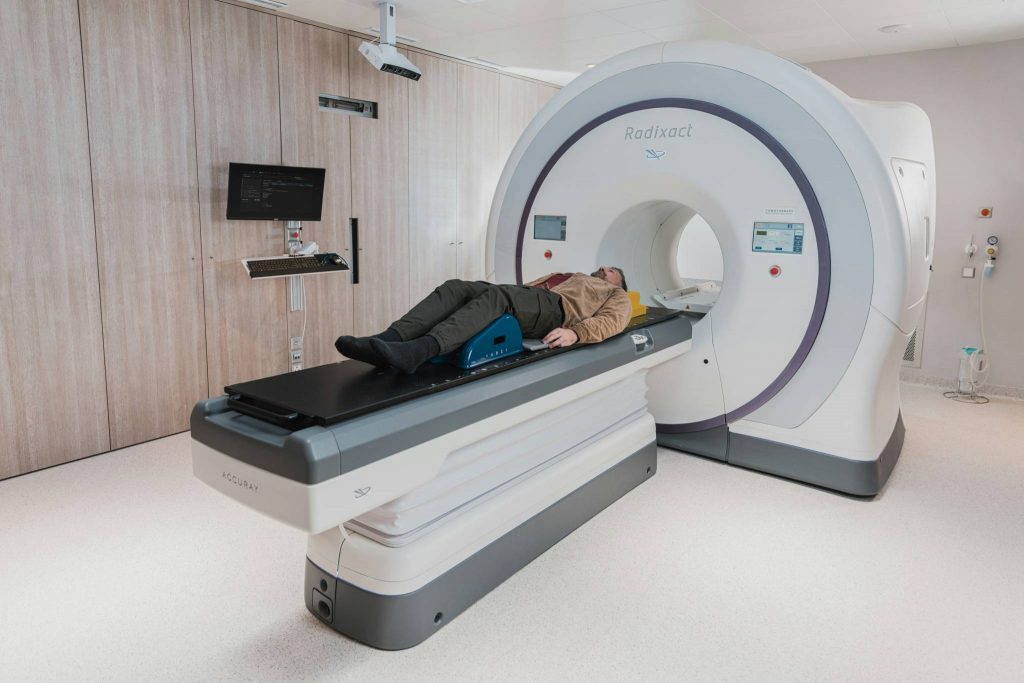 Using harmless MRI scans, we will therefore try to measure how well the fluid flows at these two locations. Not everyone with Parkinson’s has a loss of smell, and this dream-enactment behaviour occurs in about one in four people. So, there are probably different phenotypes of Parkinson’s. My expectation is that the measurement above the nose will be more strongly associated with loss of smell and hand tremor, while the measurement near the brainstem will be more strongly associated with dream-enactment behaviour and earlier gait and balance problems. In this way, we may be able to broadly distinguish between these phenotypes.”
And if the measurement works, what then?
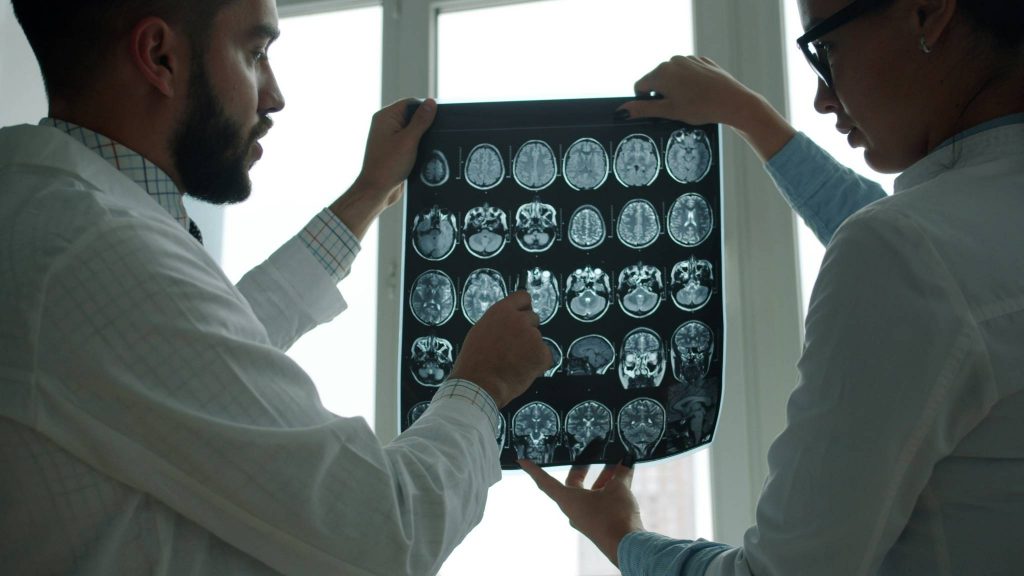 “The first study, in which we want to demonstrate these associations, is currently under way. We then want to examine the same people again after one year, and hopefully again a year later, to see whether the first measurement can tell us something about how an individual’s Parkinson’s develops over time.
But ultimately, of course, what we want is to strengthen the cleaning process itself. In my view, there are two safe ways of doing this, without medication or surgery: improving deep sleep and exercising. Animal studies already show that the heart beats faster and breathing speeds up during exercise, and that this increases the flow of cerebrospinal fluid through the brain. In humans, we also see that, on average, physically active patients have a more favourable disease course than people who are less active. If we can measure this cleaning process reliably, we can also investigate whether better sleep and more physical activity influence the progression of symptoms.”
What would you particularly like people living with Parkinson’s today to know?
“Unfortunately, sleep problems are part of this condition and can have a major impact on daily life and wellbeing. So, keep track of them and address them actively. Discuss them with your doctor, but also with your physiotherapist, who can help you move more easily in bed at night. Do not hesitate to ask for a sleep study, because people are not always fully aware of their own sleep problems. Such a study can, for example, reveal sleep apnoea, for which there are relatively effective treatments.
And perhaps most importantly: stay active. Physical activity during the day has a positive effect on your sleep at night. Talk to your physiotherapist about how you can do this safely.
“If better sleep and more physical activity have an influence on this cleaning process, we should also be able to see that in our measurements. That is what we are working towards.”
What you can do yourself to improve your sleep: Tips from Prof. Moran Gilat:
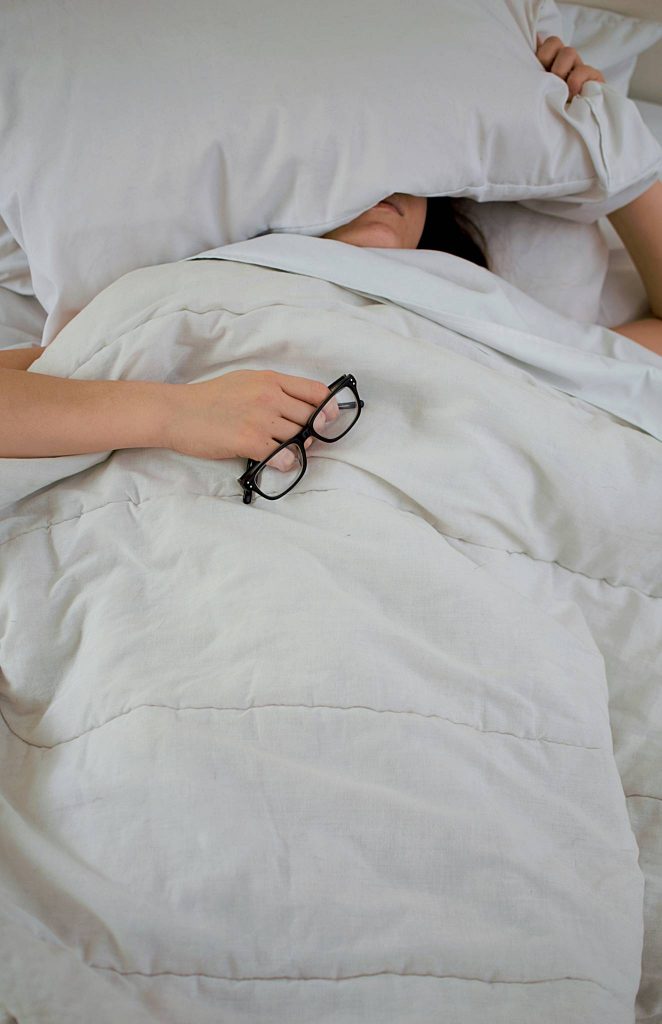 Keep a regular schedule: go to bed and get up at around the same time every day. Aim to go to bed before midnight. If you notice that you typically go to bed much later, speak to your doctor, as it may be worth looking at ways to help “reset” your biological clock.
- Develop a relaxing evening routine and follow it in the same order each night. Avoid stimulating activities or stimuli just before going to bed. Even an exciting book can keep you awake.
- Make sure your bedroom is quiet, dark and cool. Your body temperature needs to fall in order for you to sleep well. A warm shower or bath just before bedtime can help your body do this.
- Limit alcohol, caffeine and salt intake. They can disrupt sleep, so be mindful of evening snacks and avoid drinking too much in the evening if you often need to get up at night to use the toilet.
- A relatively firm mattress may help, and some people find that satin bed sheets make it easier to move around at night.
- If you are sleepy during the day, you can certainly take a nap, but for no more than 20 minutes, preferably just after lunch and definitely before 3 p.m. What matters is your total amount of sleep over a 24-hour period and a short nap counts towards that total. A longer or later nap, whether intentional or unintentional, can disrupt your night-time sleep.