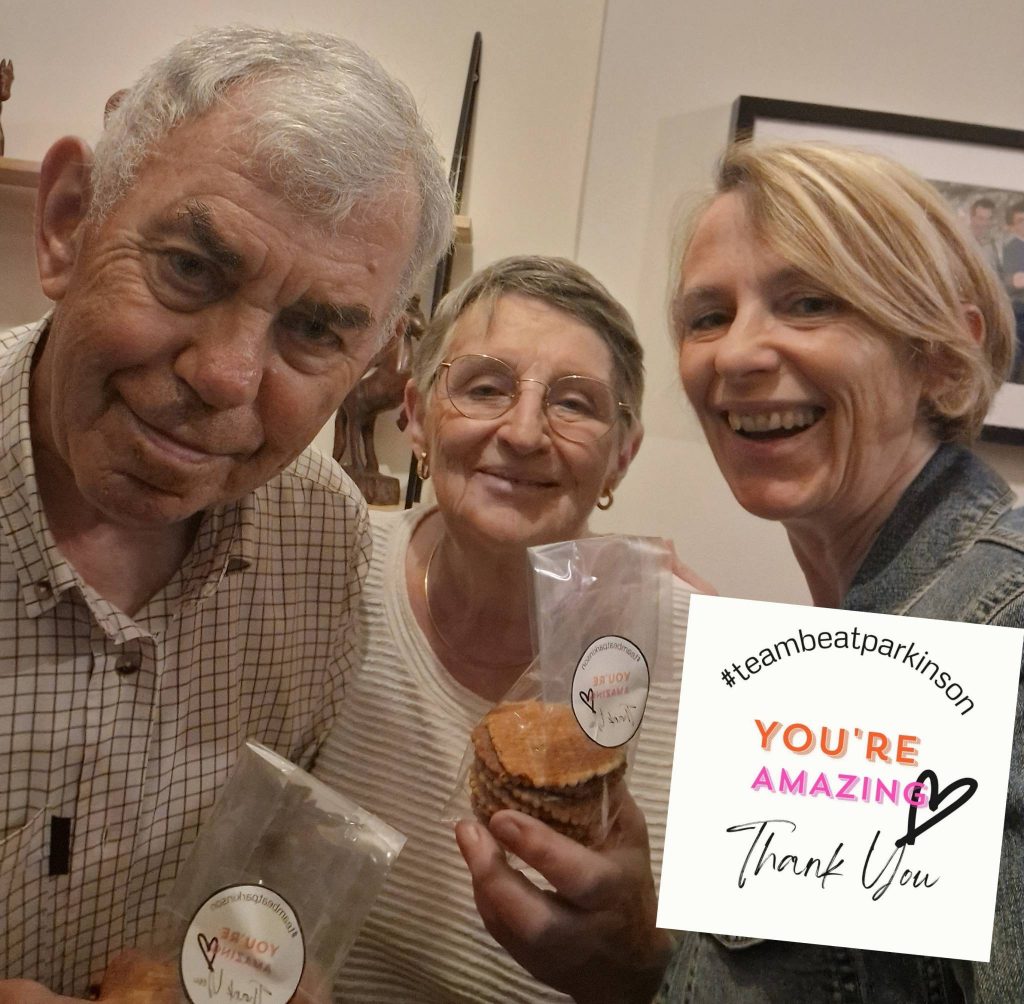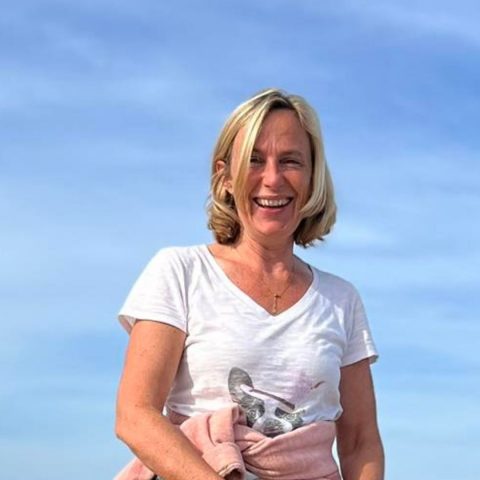
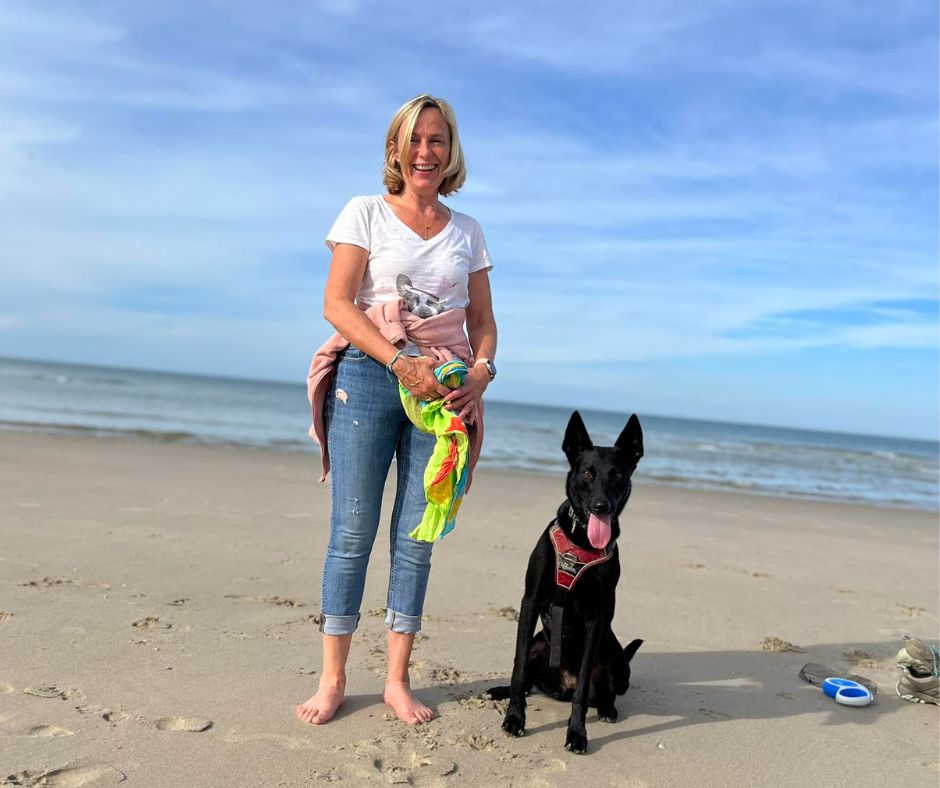
 Diagnosed with Parkinson’s disease at the age of 44, Valérie had to stop working at the age of 50. A mother of two and now a grandmother, she enjoys skiing and paragliding, even though these sports are becoming increasingly difficult, and she finds painting to be a therapeutic and meditative activity, although her hand sometimes suddenly drops the brush.
After inspiring a team of family and friends to take part in the Demoucelle Parkinson Charity’s most important annual fundraising event – Run, or Walk, for Parkinson – for the past two years, she agreed to share her story.
Can you tell us about your diagnosis and how you felt in the early years?
The first symptoms appeared around the age of 40, but I was diagnosed at 44. For a long time, I continued to work, coping with the disease. Pretending that nothing was wrong. But emotionally, it was difficult. I was afraid. I was just trying to hold on. Over time, I became increasingly tired and stressed. My “Parkinson’s package” included short nights with micro-awakenings, fatigue, pain and difficulty concentrating. This, despite taking naps on the train, at lunchtime and having two days rest at home.
The real shock came at the age of 50, when my neurologist and I questioned my ability to keep up with the pace of work. Strangely, it was on that day that I truly understood the seriousness of the disease. It took me nearly four years more to accept. Saying goodbye to my professional identity was extremely difficult. I felt like I was becoming useless to society.
A friend helped me understand that my value did not depend solely on my work. Being available, listening, connecting with others, supporting others… all of that was also extremely valuable. That way of seeing things helped me to find my place in society again.
What is your mindset regarding your illness today?
 I have learned what I call ‘active acceptance’. The illness is there. I cannot deny it. But I can choose how I live with it. I listen to my body. I remain active, even if it is for shorter periods of time: sport, painting, relationships. I continue to enjoy a full life despite my illness. I deal with it — and I keep moving forward.
The loss of my 12-year-old godson and this disease have taught me to put things into perspective. When you go through something like that, a lot of things no longer seem significant. You learn to discern what is important, to appreciate what you have, to accept that not everything is perfect. I also tell myself that from every misfortune, every difficulty, you can learn or discover something beautiful. I try to work on myself. To find meaning.
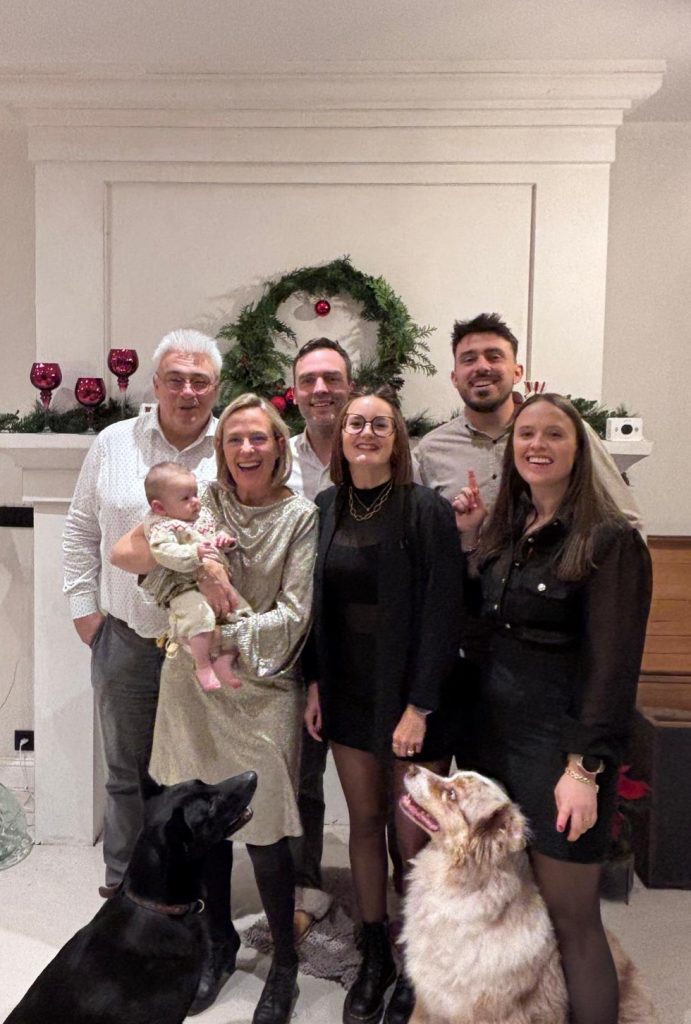
I am lucky. I have a very loving and attentive partner and family, and friends who are there for me and care so much about me. They are all GOLD, and I would like to take this opportunity to thank them again.
I am lucky. I am optimistic and positive. Of course, when I am more tired, like everyone else, I can feel anxious and get into a negative, downward spiral. So, I distract myself. I see friends, walk my dog, do something fun, practise yoga or breathing exercises. And I am on an upward spiral.
What is the most difficult thing about living with Parkinson’s on a daily basis?
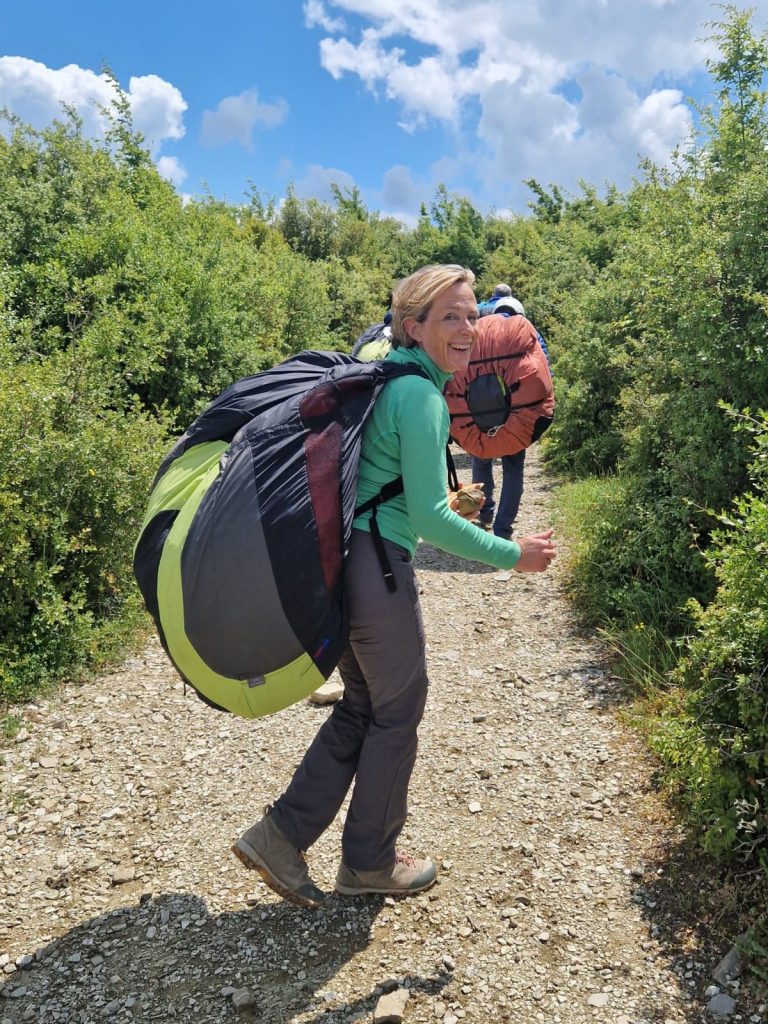 Fatigue, cognitive impairment, managing emotions, the fact that everything takes me much longer to do, and stress. Stress is what exhausts me the most! I function like an old smartphone: when the battery is almost empty, at 20%, you think you can still make calls or surf the internet. And then, without warning, everything suddenly stops. Then you have to recharge the battery. For me, it’s my medication and/or sleep that recharge my battery.
But there is also a very significant emotional element: seeing, in my father, who is now 87 years old, how the disease develops. Watching it evolve and knowing that this could be my future, is extremely difficult. Reading or hearing the testimonies of other people with Parkinson’s is also sometimes very difficult. It’s scary. Even though each patient progresses differently. We cannot always protect ourselves from this anxiety. Breathe, calm down, and of you go again!
I also make a point of taking care of myself. Since I started going to the ‘Parkinson’s Convention’ at l’Hôpital André Vésale (HUmani) in Montigny-le-Tilleul, I ‘prepare’ myself mentally and physically before each medical appointment. It’s not vanity. It’s a way to stay strong, to present myself to the world and to the disease with dignity and strength. For years, however, whenever they asked me how I was, I would reply, “I’m fine”, but I would start crying. For the past two years, things have been better. I no longer cry. I have let go of my fears. I am listened to, reassured and encouraged. Thank you also to the whole team.
How do you see the future?
I have no illusions for myself. But I sincerely hope that research will find solutions for future generations — for my children and for others. My greatest fear remains cognitive loss. I do not want to become a burden, and I will not be a burden to my loved ones.
How did you come to support the Demoucelle Parkinson’s Charity? And why?
When I discovered its philosophy: positivity, action, resilience, moving forward with a smile, and advancing research. That’s exactly my view on things and my way of living with Parkinson’s. Giving meaning to what I do also helps me make sense of the disease.
Why is it so important for you to support research?
Because research is never wasted. What we discover about Parkinson’s also helps us understand other brain diseases. It’s a collective responsibility. Research is hope for the long term. Every step forward counts.
At first, I was very reluctant to talk publicly about my disease. I didn’t want, and still don’t want, pity. Then someone explained to me that when you talk about yourself, you touch people in a different way. That people get involved first because they know someone, because there is a face, a story. So, I have come to accept this role as an ambassador. Not for myself, but to facilitate action, create momentum, and inspire people to get involved. I am not asking for compassion. I am offering energy, meaning, and action. And if my story can help other people dare to take action, then it’s worth it.
What does ‘Run, or Walk, for Parkinson’s’ mean to you?
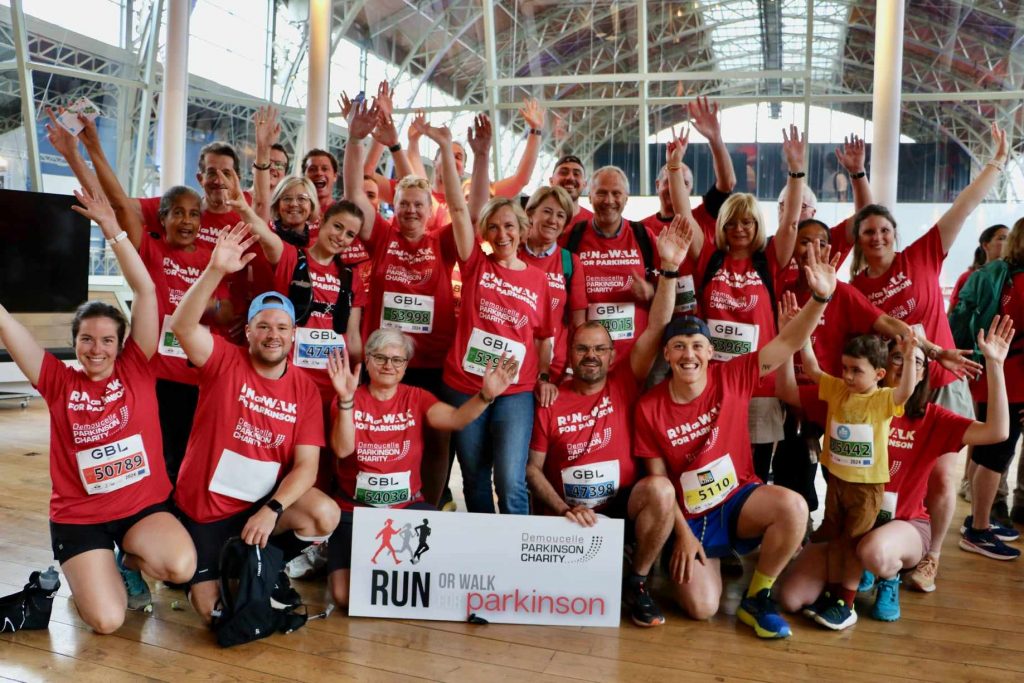 Run, or Walk, for Parkinson’s is not just a sporting event. It’s a deeply moving human experience.
Seeing friends, loved ones, young people, some of whom are not very athletic, push themselves for a cause gives immense meaning to their efforts. When someone reaches the end of the 20 kilometres in tears and says to you, ‘I did it for you,’ it’s overwhelming.
There is also something very powerful in the eyes of young people: they are proud to have run for a cause, to have participated in something bigger than themselves. You can feel that this day leaves an impression on them.
For me, it’s a source of joy, gratitude and hope. It’s a day when the disease ceases to be invisible and everyone becomes an agent of change. That’s why I always tell the participants: you are my superheroes.
Will you be part of the team again this year?
Yes — and this year will be even more emotional. My father will also be participating. He will be pushed by our family members so that he too can feel this positive energy, be part of this magical day and move forward surrounded by love. It’s our way of saying: we’re continuing, together. After all, I inherited this positive attitude from my parents. Together, we are stronger!