
 The Demoucelle Parkinson Charity (DPC) has provided seed funding for several Belgian Parkinson’s research projects, with a total budget of €320,000. The projects cover a range of scientific investigation – from cellular housekeeping to precision medicine – and reflect the complexity of the disease and the need for multiple research approaches. This initial investment helps researchers develop promising ideas into projects that can then access larger, competitive research funding.
The gap between lab and patient
Although Parkinson’s is the world’s fastest-growing neurodegenerative disease, with an estimated 10 million people living with the disease worldwide of which 45,000 people in Belgium alone, translational research in particular – the phase between fundamental discoveries and concrete applications for patients – remains structurally underfunded.
“Governments primarily fund fundamental research, while companies typically only step in for clinical trials. Right in between lies a crucial but vulnerable phase. With this seed funding, we want to help researchers take that first, necessary step.” — Anne-Marie Demoucelle, co-founder of DPC
Multiple projects at several universities
 The selected projects are at several Belgian universities, including KU Leuven, Vrije Universiteit Brussel and Université de Liège, and range from fundamental to clinically oriented research. Each project has received €40,000 in seed funding, intended to collect initial data and lay a solid foundation for follow-up financing.
“These are projects with potential, but in need of financing. They are often too applied for classical research funds, but still too early for commercial investors. By stepping in here, philanthropy helps research cross a critical threshold.” — Dr. Ian Reynolds, scientist and board member of DPC
“We’re not giving up”
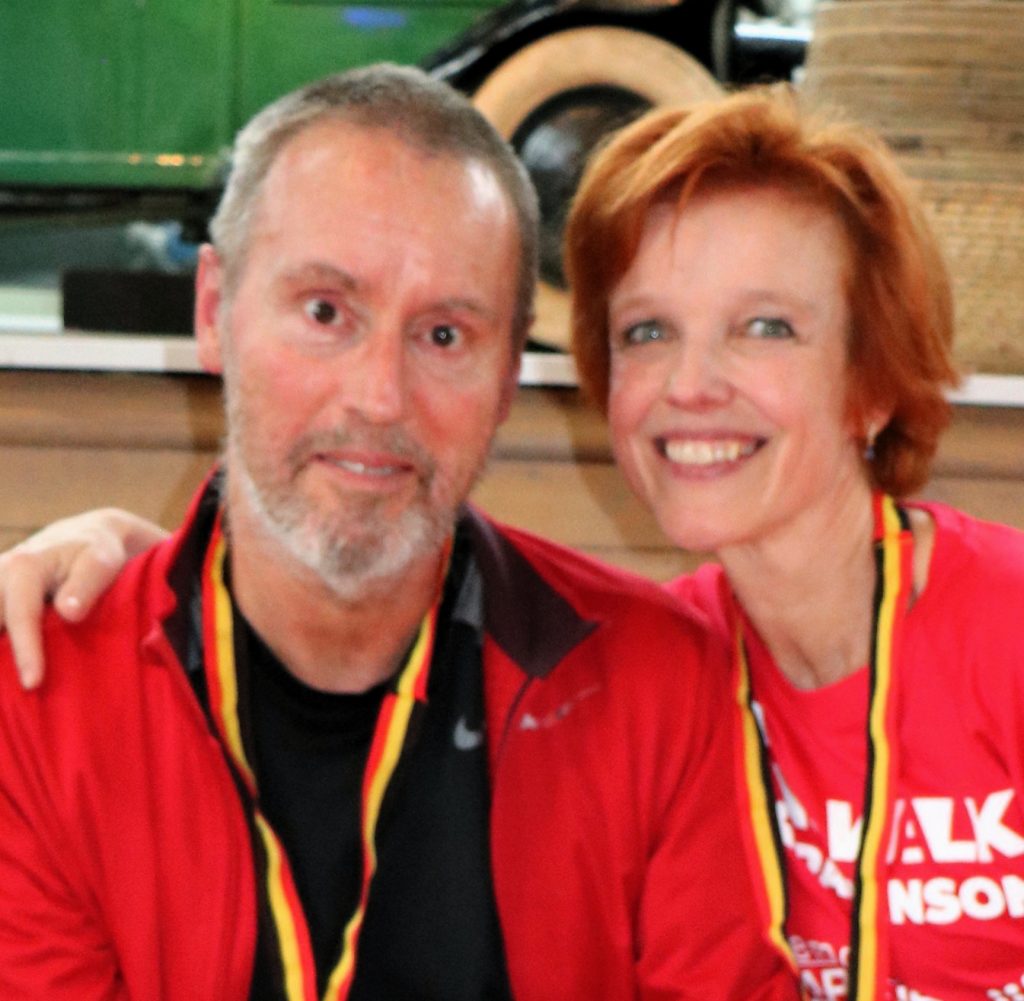 Patrick Demoucelle, co-founder and himself a patient for 21 years, emphasizes the importance of sustained commitment: “I know there’s no quick fix. But I also know that progress is possible – as long as we keep investing in good research.”
In May, Patrick will run the 20km through Brussels for the 11th time, partly in a buggy but running as much as possible. “That’s my way of saying: we’re not giving up. And these projects are our way of letting scientists know they’re not alone.”
———————————
The Belgian research projects selected by the Demoucelle Parkinson Charity for seed funding grants fall into three broad categories and are described below:
REPAIRING NEURONAL HOUSEKEEPING
Every brain cell runs a 24/7 cleaning service. Proteins are folded, refolded, or recycled; waste is shuttled to tiny acid factories called lysosomes where it’s broken down and cleared away. In Parkinson’s, this housekeeping falters. The protein alpha-synuclein starts to clump, lysosomes slow down, and neurons—especially dopamine-making ones—struggle to cope.
The following teams focus on restoring that clean-up capacity from different angles: designing drugs that stop alpha-synuclein from clumping, boosting a key lysosomal enzyme (GCase) in a new and safer way, and reviving a protective nutrient stream (polyamines) by targeting the ATP13A2 transporter. The common goal: help vulnerable neurons clear clutter and stay alive longer.
- Veerle Baekelandt
KU Leuven
In search of molecules to stop alpha-synuclein
Taking a fresh approach to screen for drugs that could reduce alpha-synuclein, this team has already found several promising molecules. Now, they aim to screen a much larger library, work out how the best candidates act, and test them in lab-grown human neurons and brain slices—aiming for true, translatable leads.
- Wim Versées
Vrije Universiteit Brussel
Nanobody-guided drug discovery
Most current drug candidates that stabilize the Parkinson-linked enzyme GCase also risk jamming it. This team uses tiny antibodies to find a safer “handle” on GCase, and will now craft small, brain-friendly compounds that grip that spot to help the cell’s recycling system work better—first for GBA1-linked Parkinson’s, and potentially for others too.
- Peter Vangheluwe
KU Leuven
Polyamines and Parkinson’s
Ageing, environment, and genes meet at ATP13A2, a molecular transporter that acts as a gate in the cell’s recycling system, importing polyamines—small, naturally occurring molecules that help protect neurons. This team will check whether ATP13A2 levels are lower in Parkinson’s brains, and test if safely boosting polyamines could calm brain inflammation and improve movement.
MATCHING MECHANISMS TO PATIENTS
Parkinson’s isn’t one disease. Under one label sit several biological subtypes driven by different faults. Getting to precision care means advancing on two fronts: mechanism-first work that reveals new, safer levers to modulate disease pathways, and patient-first platforms that sort people by the pathways that matter for them.
- Wim Vandenberghe
KU Leuven
RAB32, the “on-switch” that revs up LRRK2
RAB32 is the first Parkinson’s-linked gene identified in over a decade and acts upstream to over-activate LRRK2, a major disease driver. Understanding (and modulating) this switch could offer a safer way to tame LRRK2 activity across familial and selected sporadic forms.
- Patrik Verstreken
KU Leuven
A living “atlas” of Parkinson’s on a chip
Patient-derived neuronal “microcircuits” reveal electrical signatures of different Parkinson’s subtypes that AI can learn and match. This platform aims to stratify idiopathic patients and smartly repurpose targeted drugs (e.g., LRRK2, GBA, alpha-synuclein therapies) for those most likely to benefit.
TUNING BRAIN-BODY SYSTEMS
Not all Parkinson’s drivers sit inside neurons. Body-wide systems— sleep, the gut, and the immune response—shape how the disease begins and unfolds.
The three projects in this section tackle those levers head-on. One tests whether altered CSF flow predicts progression and whether improving sleep and exercise could “flush out” harmful waste earlier. Another isolates tiny vesicles from gut microbes to find the beneficial signals we can bottle instead of using whole-stool transplants. A third repurposes a known anti-inflammatory drug, to see if calming excessive immune enzymes can slow the disease. The promise: safe, system-level interventions that could complement neuron-targeted drugs.
- Moran Gilat
KU Leuven
Nightly brain clean-ups and Parkinson’s
Can the brain’s night-time “cleaning” flow predict who declines faster—and be boosted to slow Parkinson’s? This study maps cerebrospinal-fluid (CSF) flow in regions tied to early symptoms (smell, sleep) and asks whether safe, non-invasive interventions could keep that flow healthy.
- Gaëtan Garraux
Université de Liège
A ‘natural brake’ on inflammation
Repurposing a well-known anti-inflammatory protease inhibitor, this pilot study with 12 early-stage patients will test whether this inhibitor can nudge disease progression and immune biomarkers—tracked alongside wearables and advanced imaging. A positive signal would justify a larger, faster, more convenient delivery program.